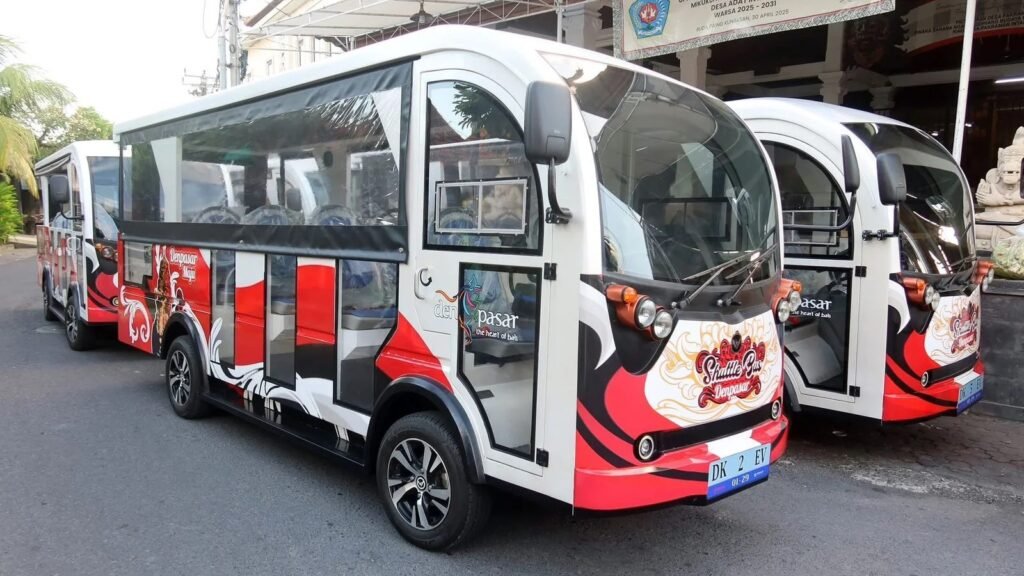
The Denpasar City Government has introduced six additional electric buses to serve the Sanur area in Bali. The vehicles are being deployed in Desa Adat Intaran and Desa Adat Sanur, both of which are being developed as part of a designated low-emission zone.
With this addition, the total number of electric buses operating in the area has reached 12 units. The initiative reflects the city’s ongoing efforts to reduce vehicle emissions, alleviate congestion, and address air pollution in one of Bali’s most visited tourism areas.
“We have prepared six additional shuttle buses, so there will be 12,” said Denpasar Regional Secretary (Sekda) Ida Bagus Alit Wiradana at the 2025 Bali Climate Week event in Denpasar, Bali, Saturday.
Trial Operations and Passenger Use
Electric bus services in Sanur began on a trial basis on 1 August 2025. The trial covered the route connecting Pantai Segara Ayu and Pantai Mertasari. Over the course of the first month, the service recorded approximately 800 passengers, consisting of both local residents and visiting tourists.
Officials have indicated that the trial period provided important insights into passenger demand and the potential effectiveness of the electric bus system in supporting urban mobility while limiting environmental impact.
“The collaboration of traditional villages will be a stimulus for joint involvement to solve problems and the Denpasar City Government also pays attention because there is a priority for the development of tourism areas in Sanur, both Intaran and Sanur Traditional Villages,” said the Denpasar Regional Secretary.
Infrastructure and Supporting Measures
The initiative in Sanur is not limited to the introduction of electric buses. The city administration has also taken steps to reorganize road infrastructure to support the transition to a low-emission area. Adjustments are being made to ensure smoother traffic flow and to accommodate the new mode of transport.
“Especially for 2025, we have arranged Sanur to be the arrangement of Jalan Danau Tamblingan, the plan for 2026 will be developed to Jalan Danau Poso, this is a concern because Sanur and Intaran are the axis of the heart of the original income of the Denpasar City area,” said Alit.
According to Denpasar Transportation Agency Head I Ketut Sriawan, further measures are being prepared to optimize the use of the buses. Plans include the establishment of designated parking areas, both at central facilities and at residential properties. These so-called parking pockets are expected to reduce the practice of on-street parking, which has been a longstanding cause of congestion in the Sanur area.
“This will reduce congestion, as well as become a spot for the Sanur area as a low-emission area. The first phase will be six units, later in November it will be 12 units, now the trial will be established again,” he said.
Funding and Procurement
The entire fleet of electric buses has been financed through the Denpasar City Government’s regional budget. A total allocation of 6 billion rupiah was used to procure all 12 units currently in operation. The funding underscores the municipality’s commitment to achieving sustainable urban transport solutions.
With the addition of the new buses, the Sanur low-emission zone now has expanded transport capacity designed to serve both local communities and tourists. City officials continue to monitor the system’s performance and are working on integrating the buses with broader transport and infrastructure initiatives in the area.
The Denpasar City Government has confirmed that the program will remain focused on reducing emissions, improving traffic management, and ensuring reliable mobility options for those traveling within the Sanur low-emission zone.